Last Updated on August 25, 2026 by ellen
There is a funny thing about kids after school: sometimes they come through the door saying they’re bored, but they’re also completely exhausted.
Posts may be sponsored. This post contains affiliate links, which means I will make a commission at no extra cost to you should you click through and make a purchase. As an Amazon Associate I earn from qualifying purchases.
They don’t necessarily want to go somewhere. They may not have the energy for a complicated craft or a big backyard game. And after a full day of learning, following directions, socializing and keeping up with a school schedule, they may simply need some time to decompress.
That doesn’t mean the afternoon has to turn into hours of screen time.
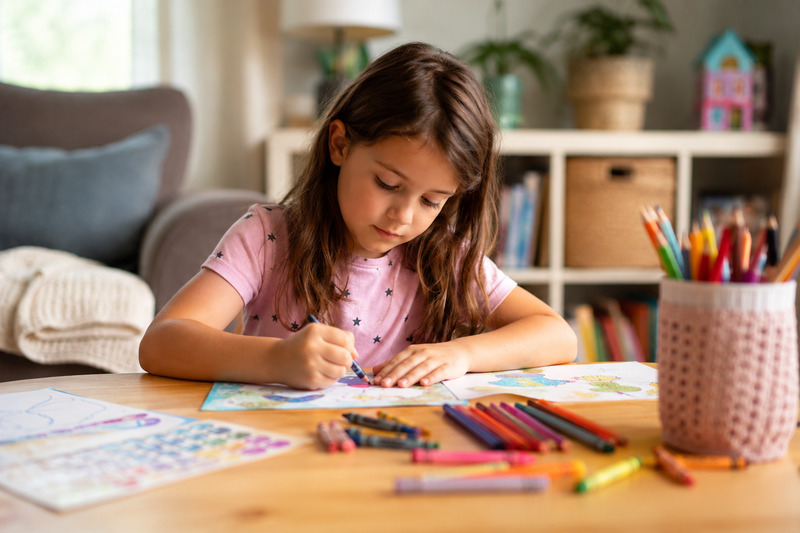
The trick is choosing easy after-school activities that don’t require a lot of energy, preparation or parental involvement.
These ideas are perfect for those first few weeks of school when everyone is adjusting to a new routine. Most take about 10–30 minutes, and many use things you probably already have at home.
Table of Contents
What Makes a Good After-School Activity?
The best activity after school isn’t necessarily the most exciting one.
For a tired child, look for something that is:
- Easy to understand
- Quick to set up
- Not overly competitive
- Flexible if your child loses interest
- Relatively quiet
- Easy to clean up
- Short enough that it doesn’t feel like another assignment
It’s also helpful to have activities with different energy levels available. Some days your child may need quiet time. Other days, they may need to move around for a few minutes before they can settle down.
Quiet Creative Activities for Tired Kids
1. Make a Sticker Scene
Give your child a piece of paper and a collection of stickers and let them create a scene.
They can make a zoo, outer-space adventure, farm, city or anything else they imagine.
There are no rules and no right answer, which makes this a particularly good choice when your child doesn’t have much patience left.
2. Try a Five-Minute Drawing Challenge
Give your child a simple prompt:
- Draw a silly monster.
- Design a dream bedroom.
- Draw an animal that doesn’t exist.
- Create a new ice cream flavor.
- Draw what you think your pet does while you’re at school.
Set a timer for five minutes and let them draw.
The short time limit can actually make the activity easier because there isn’t a big project hanging over them.
3. Create a Paper Restaurant
Have your child design a pretend restaurant.
They can come up with the restaurant name, draw a menu and decide what food they would serve.
If they have a little more energy, let them make pretend food from paper, play dough or building blocks.
4. Make a Story One Picture at a Time
Start with a simple sentence such as, “One afternoon, a very unusual thing happened.”
Your child draws the next part of the story.
Then you add another sentence.
Keep going until you have a silly little story.
This works especially well for siblings because each child can contribute one part.
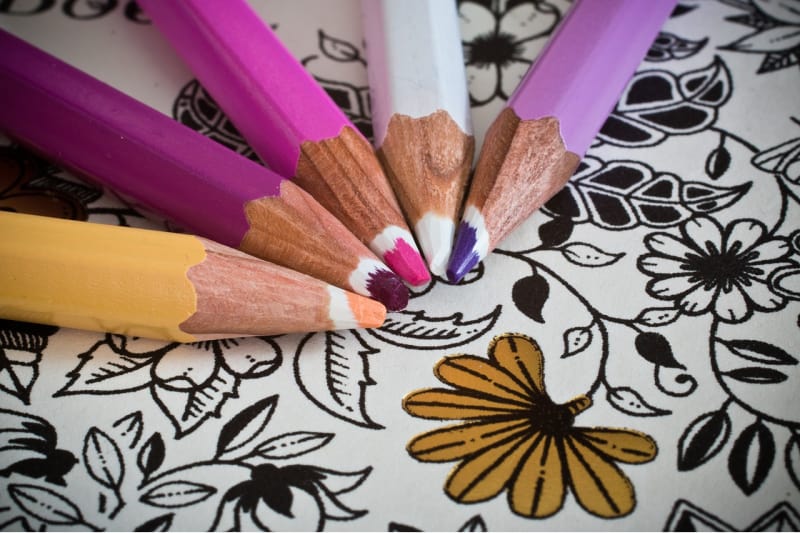
5. Set Up a Coloring Challenge
Instead of simply saying, “Go color,” give your child a specific challenge.
Try:
Can you color a picture using only three colors?
Or:
Can you make every animal in the picture a different color?
A tiny challenge can make a familiar activity feel new without requiring much energy.
Easy Games for the After-School Slump
6. Play “Would You Rather?”
This requires absolutely no setup.
Ask questions such as:
- Would you rather live in a treehouse or a castle?
- Would you rather have a pet dragon or a pet dinosaur?
- Would you rather eat only pizza or only pancakes for a week?
- Would you rather be able to fly or become invisible?
Let your child explain their choices.
This can be a surprisingly good way to reconnect after school without turning the conversation into a series of questions about their day.
7. Try a Quick Card Game
Keep a simple card game somewhere accessible so your child can pull it out without needing to search for supplies.
Choose games that can be finished relatively quickly rather than something that requires a long commitment.
If your child is exhausted, even one short round can be enough.
8. Do a Couch Scavenger Hunt
Give your child a list of five things to find around the house.
For example:
- Something blue
- Something soft
- Something that makes noise
- Something smaller than your hand
- Something that starts with the letter B
They don’t have to run around the house. The goal is simply to get them looking, thinking and moving a little.
9. Play “Guess What I’m Thinking”
Think of an animal, food, movie character or household object.
Your child gets to ask yes-or-no questions until they figure it out.
Then switch roles.
This is another activity that can be done sitting on the couch when everyone is tired.
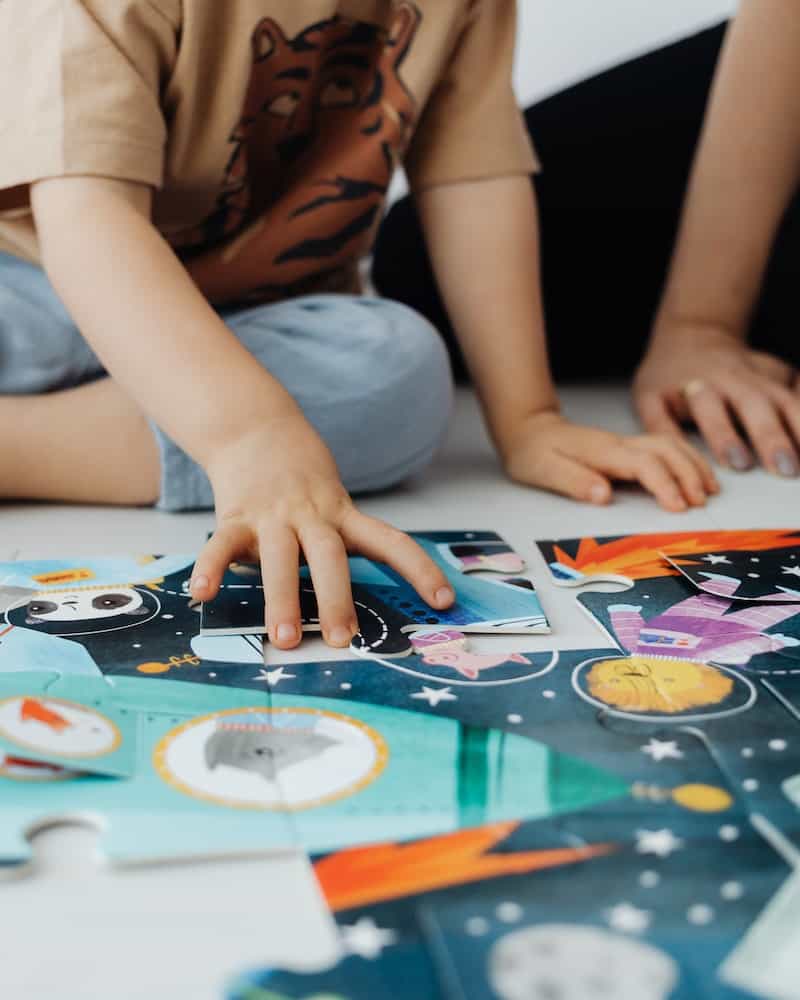
10. Do a Puzzle Together
A small puzzle can be perfect for the after-school transition.
Don’t pull out a 500-piece puzzle if your child is already frustrated. Choose something manageable that can be completed in one sitting.
For younger children, floor puzzles or simple jigsaw puzzles work well. Older kids may enjoy logic puzzles, word searches or brain teasers.
Low-Energy Ways to Get Kids Moving
Sometimes “I’m tired” really means “I’ve been sitting still all day.”
In that case, a few minutes of movement can help.
11. Balloon Volleyball
Blow up a balloon and see how long you can keep it from touching the floor.
You don’t need a net. A couch, table or imaginary line can divide the playing area.
Because a balloon moves slowly, this is much less intense than many traditional ball games.
12. Make a Mini Indoor Obstacle Course
Use pillows, cushions and other safe household objects to create a simple path.
Keep it short.
For example:
- Step over a pillow.
- Walk around a chair.
- Crawl under a table.
- Toss a soft ball into a basket.
The goal isn’t to create a giant obstacle course. A two-minute course may be all your child needs.
13. Try an Animal Movement Game
Call out an animal and have your child move like that animal.
Try:
- Penguin
- Frog
- Crab
- Bear
- Snake
- Kangaroo
You can keep it very gentle for tired kids.
14. Have a One-Song Dance Party
Put on one favorite song.
That’s it.
Your child can dance, jump, spin or simply move around.
When the song ends, the activity is over.
This is a great option when your child needs to shake off some of the school-day energy but you don’t want to commit to a full activity.
15. Indoor Target Toss
Set up a laundry basket or another large container and give your child soft objects to toss into it.
Move closer or farther away depending on their energy level.
It turns a few minutes of movement into a simple game without requiring much space.

Activities Kids Can Do While You Make Dinner
Sometimes the real challenge isn’t finding something fun to do.
It’s finding something your child can do while you are busy.
16. Give Them a Building Challenge
Instead of simply handing over building blocks, give your child a challenge:
Can you build a house for a tiny animal?
Other ideas:
- Build the tallest tower you can.
- Build a bridge.
- Build a vehicle.
- Build a playground.
- Build something that can hold five small toys.
A specific goal gives independent play a little more direction.
17. Set Up an Activity Tray
Put a few simple supplies on a tray:
- Paper
- Crayons
- Stickers
- Scissors
- Glue
- Washi tape
The tray becomes an invitation to create without requiring you to organize a project.
For younger children, make sure the supplies are age appropriate and supervised as needed.
18. Pair an Audiobook With a Quiet Activity
Put on an age-appropriate audiobook while your child colors, draws, builds or works on a puzzle.
This can be a great compromise for families trying to reduce recreational screen time without expecting children to sit quietly doing nothing.
Pinterest’s 2026 Parenting Trend Report found that searches for screen-free activities have risen significantly, along with interest in physical and indoor activities for kids.
19. Start a “Make Something for Someone” Project
Ask your child to create something for another family member.
It could be:
- A drawing
- A bookmark
- A paper card
- A tiny LEGO creation
- A joke book
- A decorated note
It gives the activity a purpose without making it feel like homework.
20. Create a Family Book Basket
Put several books in a basket and let your child choose one after school.
You could make the basket more interesting by adding a stuffed animal, blanket or small snack.
For an older child, add graphic novels, joke books, magazines or nonfiction books along with traditional children’s books.
The goal is to create an easy place to land when the school day is over.
Choose an Activity Based on Your Child’s Energy Level
You don’t have to decide what to do before your child gets home.
Instead, try matching the activity to their mood.
If your child is completely wiped out
Choose:
- Coloring
- Stickers
- Audiobooks
- Reading
- Puzzles
- Drawing
If your child is tired but restless
Try:
- Balloon volleyball
- A one-song dance party
- Animal movements
- Target toss
- A short scavenger hunt
If your child still has plenty of energy
Try:
- An obstacle course
- A longer building challenge
- Outdoor play
- A backyard scavenger hunt
- A family game
This simple approach can prevent the common mistake of offering an exhausted child an activity that requires even more energy.
Don’t Over-Schedule the First Weeks of School
The beginning of a school year can be a major adjustment for children and parents.
There are new teachers, new classrooms, new schedules, homework, activities and earlier mornings. Current conversations around back-to-school stress are emphasizing the value of keeping the first few weeks manageable rather than immediately filling every afternoon with additional commitments.
Family fun doesn’t have to mean going somewhere every afternoon.
Sometimes the best after-school activity is 20 quiet minutes at the kitchen table with crayons.
Sometimes it’s a quick game before dinner.
And sometimes your child really does need to flop on the couch with a book and do absolutely nothing for a while.
That’s okay, too.
Make After-School Time Easier With a Simple Routine
You can make this transition even easier by creating a predictable rhythm.
For example:
Home → Snack → Decompress → Short activity → Homework/chores → Dinner
The exact order will depend on your family, but having a general routine can make afternoons feel less chaotic.
You can also keep a small collection of “I’m bored” activities ready to go. A basket of cards, puzzles, coloring supplies, books and building materials means you don’t have to invent something every afternoon.
And remember: you don’t need to entertain your child for the entire time between school and dinner.
The goal isn’t to fill every minute.
It’s to give kids a few easy ways to reconnect with themselves, their family and the world around them after a busy day.
Final Thoughts
After-school activities don’t need to be elaborate to be worthwhile.
For a tired child, a five-minute drawing challenge may be more appealing than a complicated craft. A balloon game may work better than a trip somewhere. And a quiet book may be exactly what they need.
The best activities are the ones that fit the child you actually have in front of you that afternoon.
Keep a few quiet ideas, a few movement ideas and a few independent activities on hand, and you’ll always have something to try when your child comes home saying, “I’m bored.”
And on the really exhausting days?
A snack, a cozy spot and some downtime count as family time, too.

Welcome to In Our Spare Time, your go-to source for family-friendly fun. Discover honest reviews, entertaining articles, and fresh ideas for making the most of your free time with younger kids. From games, movies, and books to family activities and seasonal adventures, we help parents find simple ways to create memorable moments together.