Last Updated on October 24, 2026 by ellen
Ask a kid to tell you a story about the family dog and you will rarely get a short answer. You’ll hear about the time he stole a whole sandwich off the counter, and then, without a breath, about the way he barks at the vacuum like it owes him money. For a lot of children, the family pet is the first character they know inside and out, which makes it a natural star for a picture book.
Posts may be sponsored. This post contains affiliate links, which means I will make a commission at no extra cost to you should you click through and make a purchase. As an Amazon Associate I earn from qualifying purchases.
A pet picture book is also a project the whole household can share. Little ones can dictate ideas, older kids can write the words, and parents can handle the pictures and the printing. According to the American Pet Products Association’s 2025 survey, about 94 million US households own a pet, so there is a good chance your main character is already asleep on the couch.
Image source: https://files.catbox.moe/h76hte.jpg
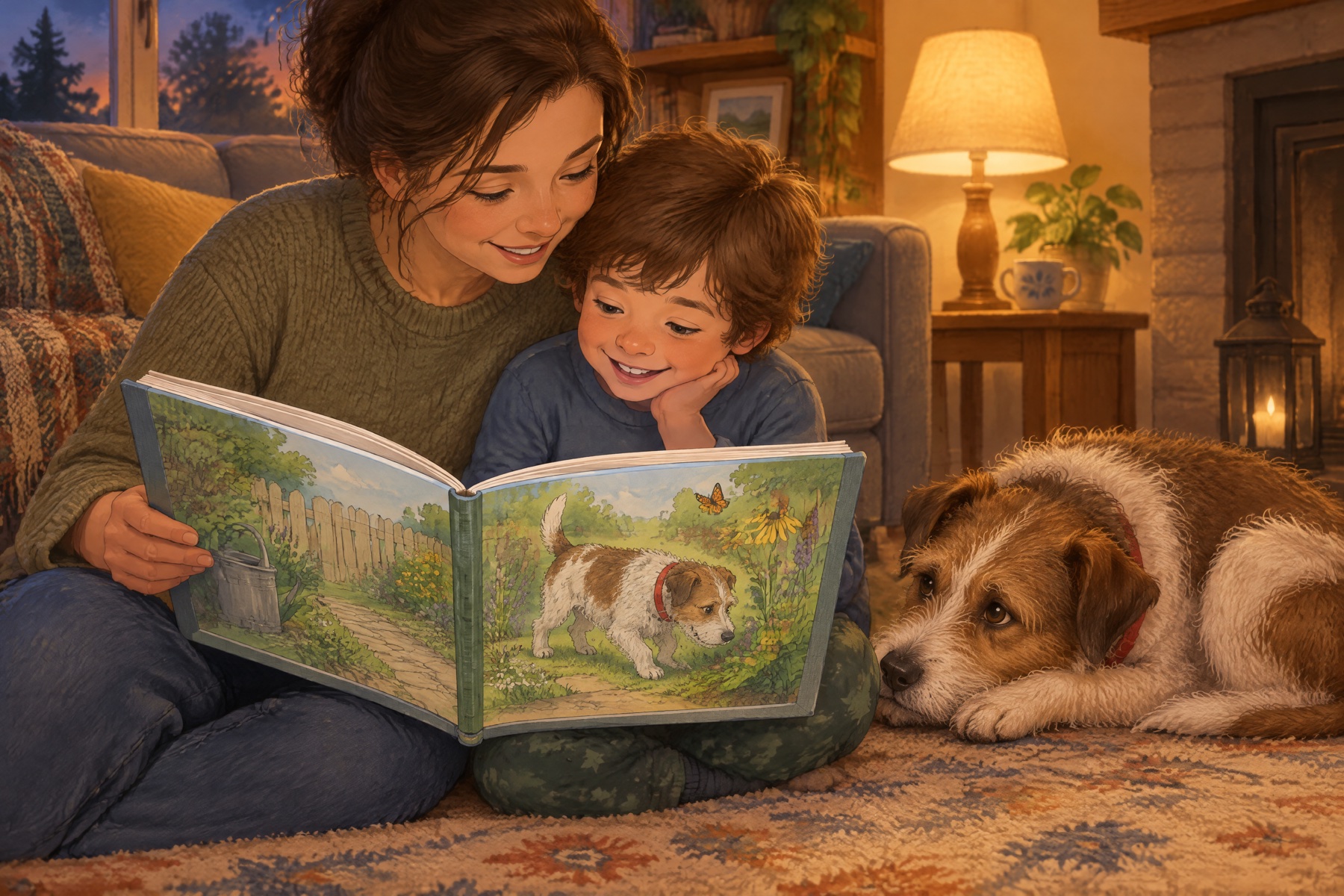
A parent and young child reading a homemade picture book on the living room rug while their scruffy terrier lies beside them, looking at a cartoon version of himself on the page
Table of Contents
Start by collecting your pet’s best stories
Before anyone writes a page, spend a week gathering material. Keep a notebook on the kitchen counter or a shared note on your phone, and add to it whenever someone remembers something funny or sweet.
These questions get kids talking:
- What does our pet do when nobody is watching?
- What is our pet scared of, and when is it brave?
- If our pet could talk, what would it complain about?
- Where would our pet go if it snuck out for one afternoon?
Write the answers down in your child’s own words. A line like “Pepper thinks the mailman is a monster” makes better story material than anything an adult will come up with, and it gives your child real ownership of the book.
Turn one adventure into a simple story
Most picture books follow the same basic shape. A character wants something, runs into a problem, and finds a way through it. Pick one story from your list that fits. Maybe the cat wants the warm spot on the windowsill, but the new puppy got there first. Maybe the dog loses his favorite ball at the park and the kids help him look for it.
Keep it short. A traditional picture book has 32 pages, which leaves roughly 12 to 14 spreads for the story once the title and copyright pages are in. Many published picture books come in under 500 words. A family book can bend those rules, but a short story is far easier to illustrate and much more likely to get finished.
Here’s what that might look like for a beagle named Pepper:
- Pepper hears the mail truck and hides under the bed.
- The kids decide to help Pepper be brave.
- They practice with a cardboard mail truck in the living room.
- The next morning, Pepper waits by the window with his tail wagging.
- The mail carrier hands him a dog biscuit, and Pepper decides the mail truck isn’t so scary after all.
Write one or two sentences per page and read the draft aloud to your kids. If they interrupt to add things, you’re on the right track. Keep their best ideas and cut anything that slows the story down.
Turn your pet into a cartoon character
This is where most families get stuck. Drawing the same dog twenty times, and having him look like the same dog every time, is hard even for people who can draw. It is also where AI illustration tools have become useful for home projects.
Neolemon was built around exactly this problem. You upload a clear photo of your pet, pick an art style such as watercolor, 2D flat illustration or a Pixar-inspired 3D look, and it turns the photo into a cartoon character. For a picture book, the most useful first image is a full-body view of your pet on a plain background, because that image becomes the reference for every page that follows.
A few tips for the photo:
- Use a sharp, well-lit picture with only your pet in the frame.
- Make sure the markings you care about are visible, like the white patch over one eye or the crooked ear.
- Choose one style and keep it for the whole book.
Pets rarely pose on command. Take a burst of photos while someone holds a treat just above the camera, then pick the sharpest one.
Let your child pick the style. They will have strong opinions, and they are usually right.
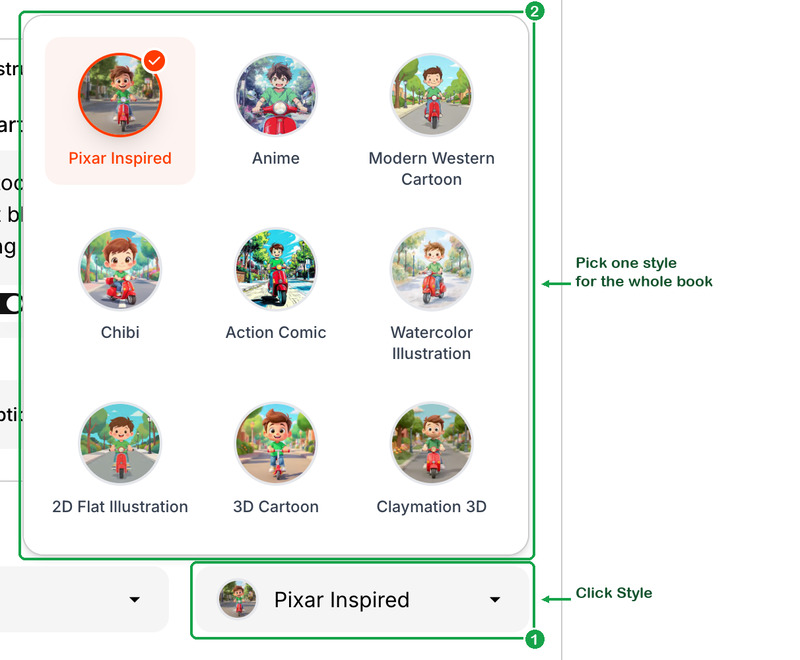
The Photo to Cartoon style picker showing nine art styles, from Pixar Inspired and Watercolor Illustration to Claymation 3D, with a note to pick one style for the whole book
Build a small cast of recurring characters
Most pet stories need a few more faces: the kids, a grandparent, the neighbor’s cat, the dreaded mail carrier. Decide early who shows up more than once and give each of them a few fixed details, like a yellow raincoat, red sneakers or round glasses. Keep these on one character list so everyone working on the book describes them the same way.
Consistency matters more than most parents expect. Children notice when a shirt changes color between pages, and they will ask about it. Tools made for illustrations for children’s books keep each character’s face, colors and proportions the same from page to page, and they can put two characters in one scene, so your daughter and the dog can share the same picnic blanket.
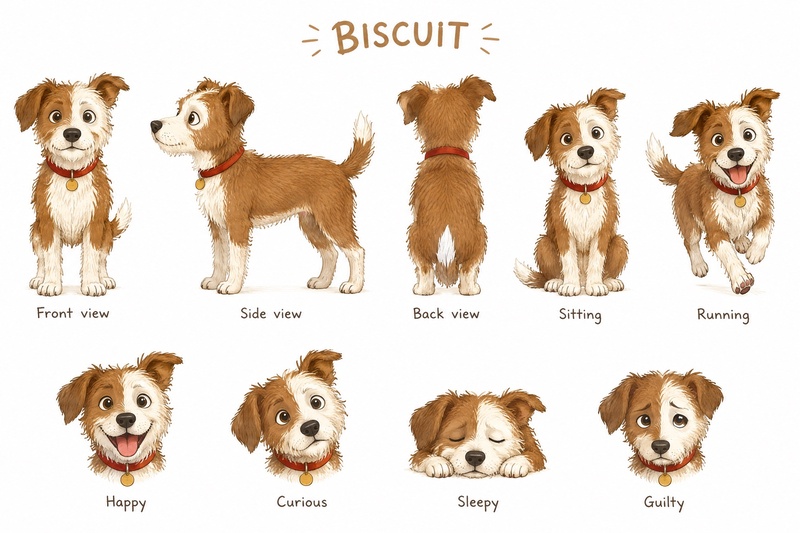
A character reference sheet for a cartoon terrier named Biscuit, showing front, side and back views, sitting and running poses, and four expressions from happy to guilty
Illustrate the story page by page
Go back to your story and add a short picture note for each page. Who is in the scene, what are they doing, where are they, and how do they feel? “Pepper hides behind the couch with only his tail showing while the vacuum roars” is plenty.
Then make the pages one at a time. Neolemon has separate editors for actions and poses, facial expressions, outfits and backgrounds. Each one changes a single thing, so your pet stays recognizable whether he is digging up the carrots, chasing a kite or asleep in his basket.
This is a good stage to hand some control to the kids, because they love directing. Let them decide whether the dog looks guilty or proud on the page where he steals the sandwich. Make both versions and take a family vote.
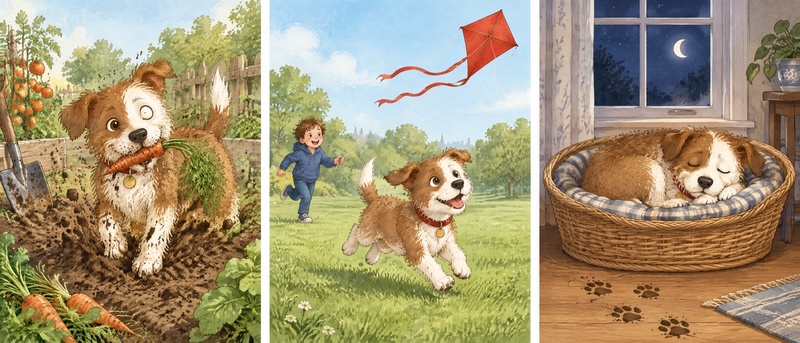
Three picture book pages starring the same cartoon terrier: digging up carrots in the garden, chasing a red kite across the park, and asleep in his basket beside muddy paw prints
Put the book together and read it as a family
Once you have a picture for every page, gather them in one place and add your text. Neolemon lets you collect illustrations in a project and export the pages as a PDF. Canva works too if you would rather design the layout yourself. Keep the words away from faces and paws, and leave some breathing room near the edges.
From there you have a few options:
- Order a copy from a local print shop or an online photo book service for a sturdy book your kids can keep.
- Self-publish through Amazon KDP or Lulu if you want extra copies for grandparents.
- Share a digital flipbook link with relatives who live far away.
Then comes the best part. Read it together at bedtime. Let the youngest point out the dog on every page, and let the oldest read the part they wrote.
A book that outlasts the puppy years
Pets don’t stay small, and they don’t stay with us forever. A picture book holds on to the details that are easy to lose, like the way the kitten slept in a shoebox or the summer the dog finally learned to swim. Some families make one after a pet has died, as a gentle way to help children remember and talk about the loss.
Either way, a few weekends of work gives your kids a book they will pull off the shelf for years. Start with one story and one good photo. Your main character is probably watching you from the end of the couch.

Welcome to In Our Spare Time, your go-to source for family-friendly fun. Discover honest reviews, entertaining articles, and fresh ideas for making the most of your free time with younger kids. From games, movies, and books to family activities and seasonal adventures, we help parents find simple ways to create memorable moments together.